"Personalized learning" has been one of education's favorite buzzwords for the better part of a decade. It appears in district strategic plans, vendor sales decks, conference keynotes, and grant applications. Almost every edtech product sold to schools today describes itself as personalized in some way.
Adaptive learning is something more specific — and the distinction matters when you're deciding what to actually buy and deploy.
What Personalization Usually Means
When most products say "personalized," they mean one of a few things. A student gets to choose from a set of activity types. The interface adjusts based on a learning style quiz completed on day one. Or — most commonly — the system puts students into predetermined tracks based on an initial placement assessment and keeps them there.
Track-based personalization is better than nothing. At least a student who enters a course significantly below grade level starts with material closer to their actual level. But the track is largely static. Once placed, the student stays in that lane unless someone manually moves them.
This is where most "personalized learning" products stop. They customize the starting point, not the ongoing path.
What Adaptive Actually Means
Adaptive learning systems respond to what a student does in real time. Not just at the start of a unit — during every practice set, every response, every pattern of errors. The system is continuously inferring what the student understands and what they're still working through, and it adjusts the next set of problems accordingly.
If a student answers three questions correctly on adding fractions with like denominators, the system moves them to unlike denominators rather than giving them four more of the same. If a student who was placed in an on-grade track makes a series of errors that suggest a specific gap — say, they haven't fully internalized place value — the system can pull in review material without requiring the teacher to intervene.
The critical difference is continuous feedback loops. A personalized system adjusts once. An adaptive system adjusts constantly.
Why This Distinction Gets Collapsed
The two terms get conflated partly because adaptive systems are a form of personalized learning — just a more sophisticated one. And vendors have an obvious incentive to describe their products with whatever language is most favorable.
It also gets collapsed because the underlying architecture isn't always visible to buyers. A district can't easily tell from a sales demo whether the product is tracking a student's performance moment-to-moment or just assigning them to a level at the start of each unit. You have to ask directly: what triggers a change in content? How frequently does the system recalibrate? What data is it using?
Those are fair questions to ask any vendor. If the answer is vague, that's informative.
The Teacher Visibility Problem
There's a practical dimension to this distinction that doesn't get enough attention. An adaptive system should be generating rich data about each student's performance — not just their overall level, but which specific concepts they've mastered, where they're making errors, and how quickly they recover from mistakes.
That data is only valuable if teachers can see it and act on it. A system that adapts the student's experience without surfacing that intelligence to the teacher has done half the job. The teacher is still operating partially in the dark about why certain students are struggling or which concepts need reteaching at the class level.
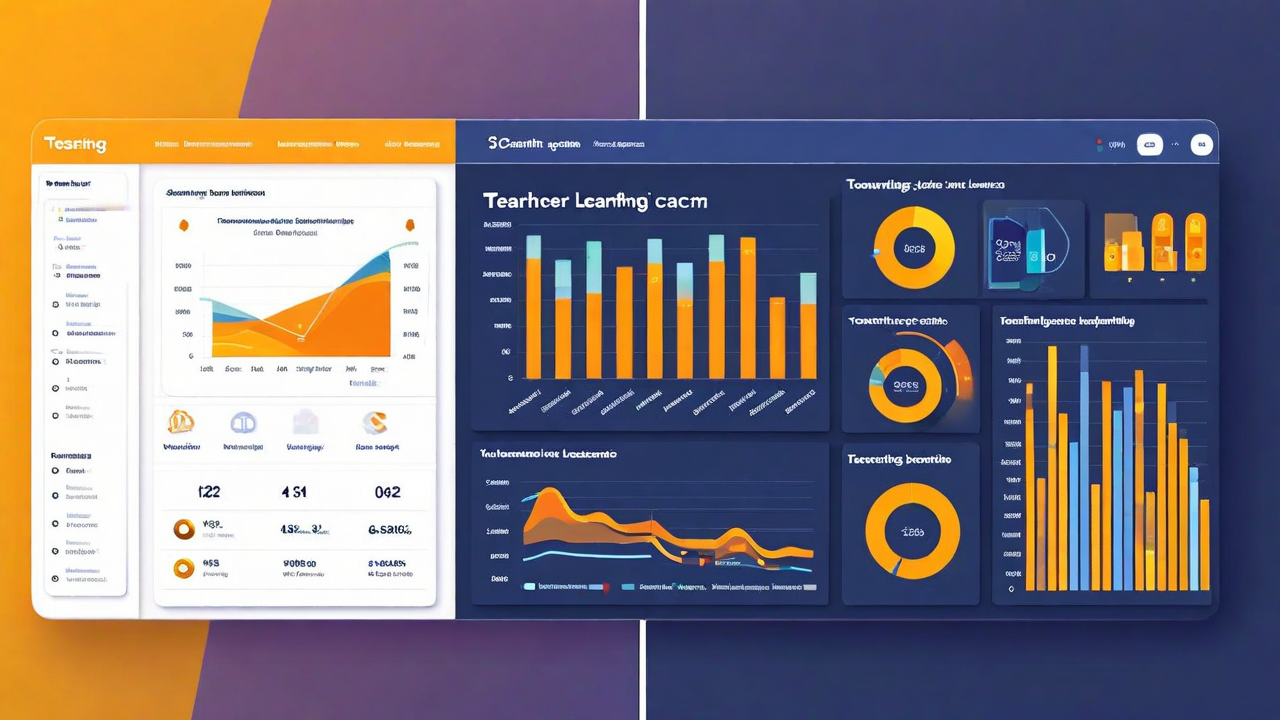
A well-designed adaptive platform feeds the teacher dashboard with the same data it uses to adjust student content. The teacher can see, at a glance, that six students in the class still haven't demonstrated mastery of multi-step word problems, while twelve others are ready to move on. That's actionable. That's what makes the difference between a tool that replaces teacher judgment and one that sharpens it.
What to Look for When Evaluating Products
Ask any edtech vendor these four questions before you sign:
1. How often does the system recalibrate a student's path? Once per unit is personalization. Continuously during a session is adaptive.
2. What's the granularity of the skill model? A good adaptive system tracks dozens or hundreds of discrete skills, not just broad subject areas. The finer the skill map, the more accurate the adjustments.
3. What do teachers see? Adaptive data should surface to teachers in a usable format, not just to the platform's analytics reports.
4. How does the system handle a student who plateaus? A genuine adaptive system should detect when practice isn't producing progress and change its approach — adding worked examples, breaking a concept into smaller steps, or flagging the student for teacher attention.
These questions won't guarantee you're buying the right product. But they'll help you understand what you're actually buying — which is a better starting point than most districts have when they sign a three-year contract.
A Note on Realistic Expectations
Adaptive systems work best as one part of a broader instructional model, not as a replacement for direct teaching, discussion, and collaborative work. No adaptive algorithm can replicate a skilled teacher working with a small group — the back-and-forth, the reading of confusion, the reframing of a concept in language that suddenly clicks.
What adaptive technology does well is handle the repetitive, practice-heavy work of skill building at a personalized level for every student, while freeing teachers to focus on the work that actually requires human judgment. That's a meaningful contribution. It's just not a complete solution on its own.
Knowing what a tool can and can't do is the prerequisite for using it well. The terminology problem matters because it shapes expectations — and unmet expectations are usually where pilots fail.